
Say “tech founder” and most people picture the same guy: young, bold, a little reckless, definitely male. Zuckerberg. Elon. Kalanick. Move fast, break things, never apologize.
But that’s one archetype. Not the only one.
Anna Barber and Jenny Fielding have spent the last two decades building our own companies and investing in hundreds of others. Four years ago we built a framework for the founder types we kept seeing over and over again - and it’s held up, even through the AI boom.
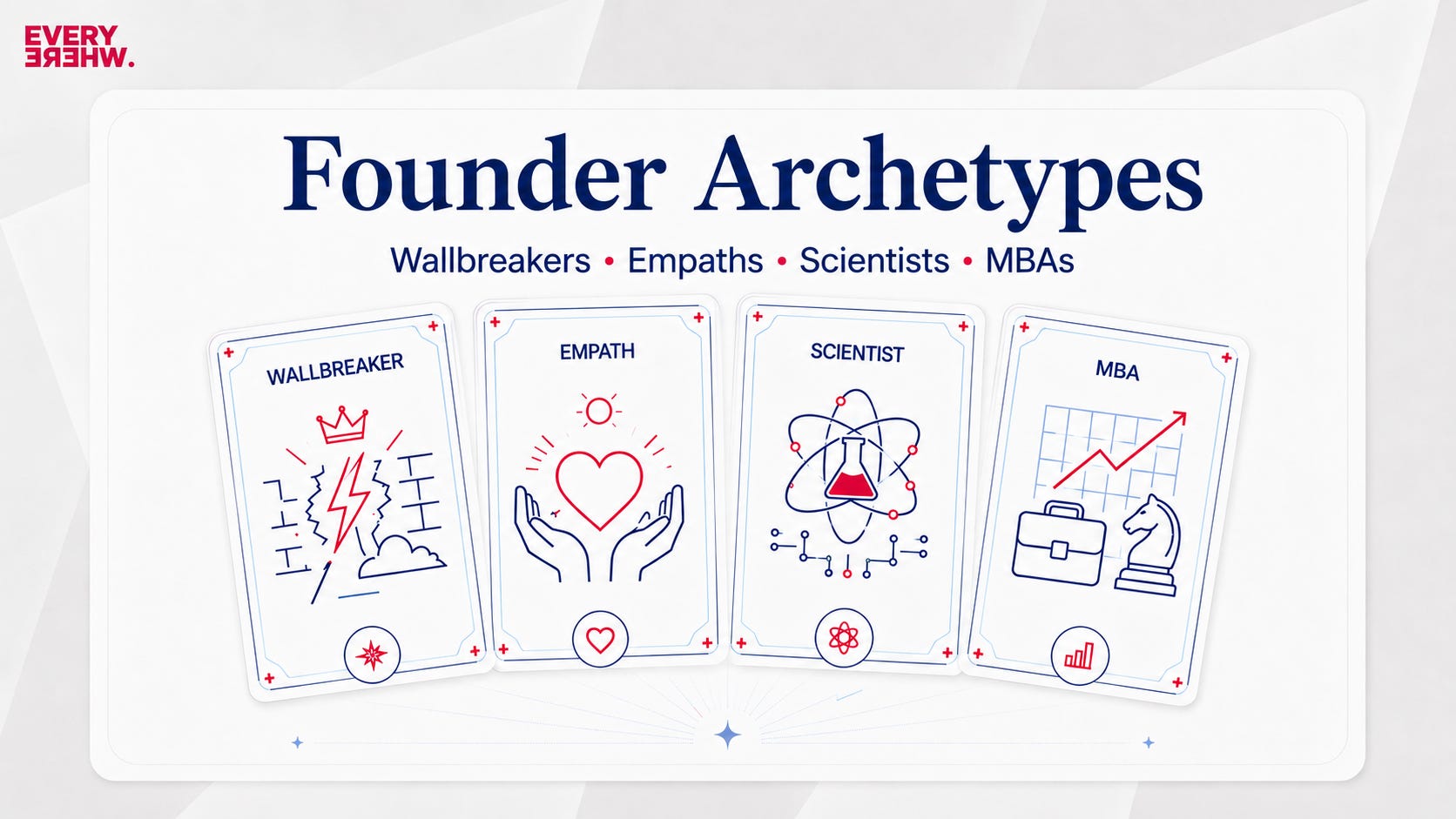
We call them: the Wallbreaker, the Empath, the Scientist, and the MBA. Each has strengths, each has blind spots. We find this framework useful because when you can name your archetype, the strengths and blind spots become easier to identify and then compensate for.
It’s useful for us as investors too. We each gravitate toward certain types and go easy on their flaws, which also means we’ve definitely passed on great founders simply because they weren’t “our type.” I have one painful example of this that I won’t name - a “wallbreaker” founder I was just allergic to and passed on, who went on to have great success with his company. The more we understand these archetypes and our own leanings as investors, the better decisions we can make.
The Wallbreaker
The Wallbreaker is part visionary, part tyrant. They see something no one else can see, and they’ll go through (not around) anything in the way. Ambitious, hard-driving, magnetic. They can raise money, tell a big story, and pull top talent into their orbit. Inside the company, that same intensity has a dark side - control and impatience. People describe Wallbreakers as both charming and arrogant.
Elon Musk is the archetype of this archetype. He projects a vision so big that investors, customers, and the internet at large rally around it - even while running multiple companies at once. The company becomes an extension of him. We all saw Gwynne Shotwell ringing the bell at the SpaceX IPO - but whose name do you think of when you think of SpaceX?
From Jenny: I’ve worked with plenty of Wallbreakers who became great CEOs. They’re not always open to feedback at first, but some come around once trust is built. I’ve also walked away from a few who were just too arrogant and argumentative to deal with.
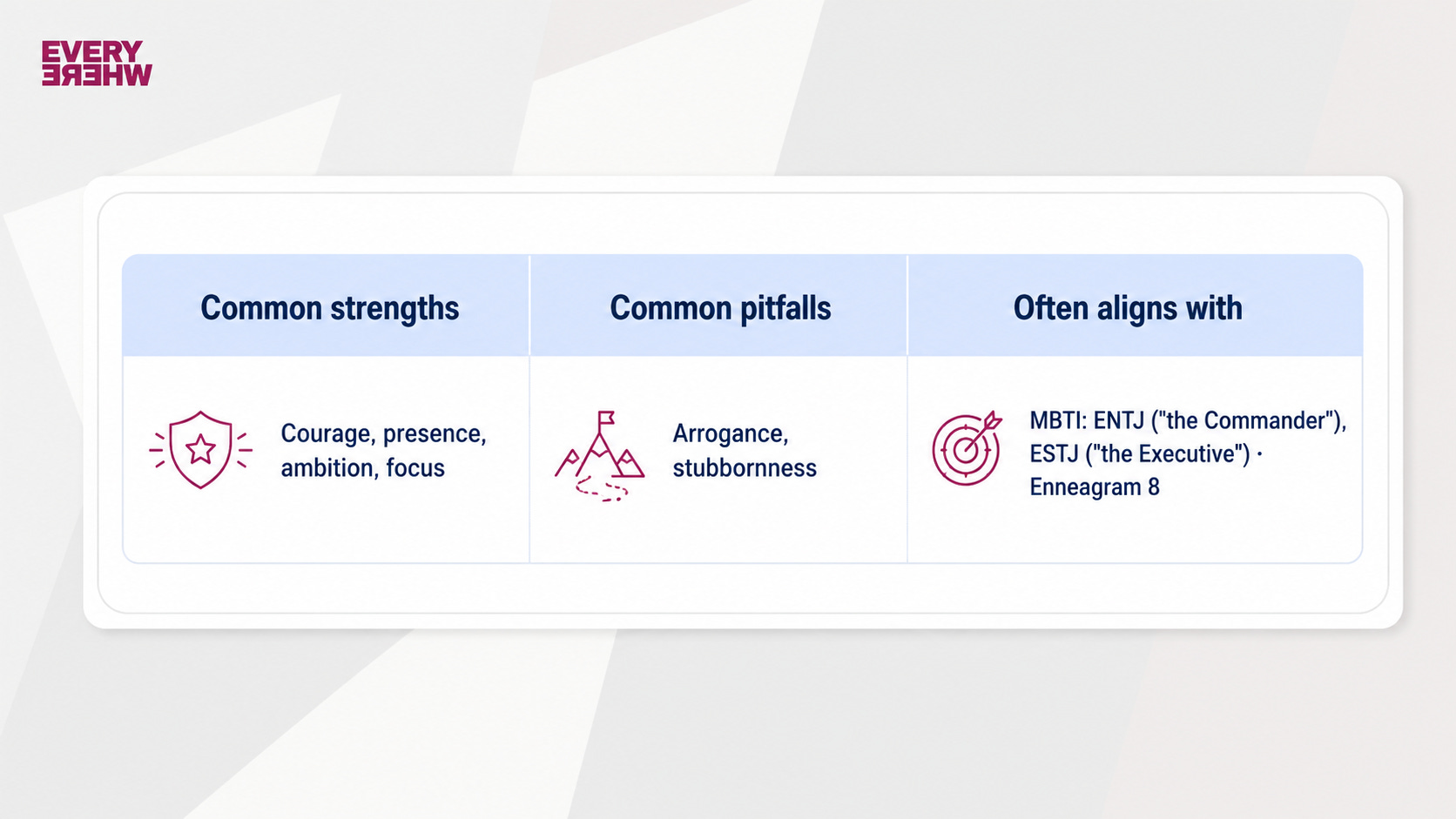
Wallbreakers are unafraid of the impossible, exactly what you need when you’re building something with a hundred unknowns. They tend to be pioneers, not iterators: you’ll find them in robotics, crypto, and spacetech. They take heavy pushback simply for being bold, and their singular focus (obsession) is what keeps the ship moving forward.
That same focus can turn into a bunker mentality. Wallbreakers often keep a tight inner circle and control the flow of information, which can breed a toxic, siloed culture if left unchecked. A Wallbreaker without self-awareness makes for a hard place to work.
The Empath (Crusader)
Mission-driven. Deep founder-market fit. Usually an accidental entrepreneur. The Empath starts a company because they can’t stop thinking about a problem, not because they set out to build a business. Like the Wallbreaker, they’ll do slightly unreasonable things to get it off the ground.
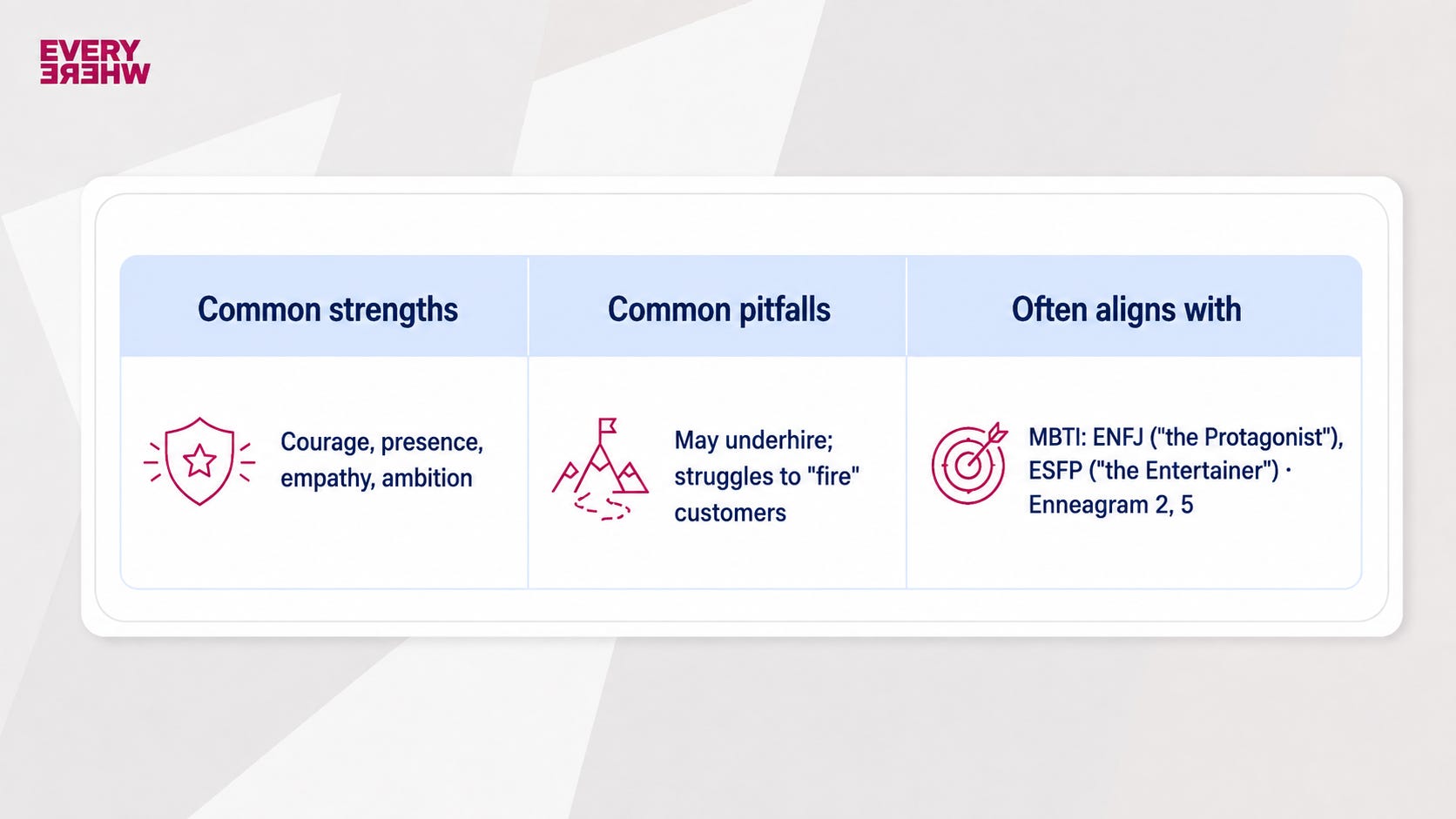
Empaths tend to start with no plan and no product, just an urgency to help their chosen customers. What begins as a side project snowballs into a company. They’re natural “line leaders”: charismatic, inspiring, and they understand their customers better than anyone else in the building, because they actually listen.
Where they get into trouble is scale. They’ll put the customer ahead of the team, struggle to hire for skills they don’t have, and spend too little time thinking about how the business actually makes money. Given time to learn and the right hires around them, Empaths grow into strong CEOs.
From Anna: Empaths are my favorite founders to work with. Their passion is contagious, and it usually attracts a founding team that’s just as purpose-driven, which becomes the backbone of a strong culture. Their gifts - courage, presence, deep market knowledge - are hard to teach. When they also commit to learning resilience, focus, and management, they become exceptional leaders.
The Scientist
The Scientist is the deep-thinking, technical founder, mission-driven but relentlessly practical. They live in the product, obsess over the details, and can spiral into perfectionism. Because they tend to be introverted, they process internally instead of asking for help.
Scientists thrive on identifying a problem and solving it systematically. At their best, they surround themselves with other independent thinkers, which is great for diversity of thought, but their networks tend to be smaller, so their pool of hires, investors, and advisors is often thinner too.
From Jenny: I love working with Scientists. They’re quirky, offbeat, genuinely open to new ideas. When a Scientist is open to feedback, it’s magic. They absorb new information fast, and when they are self-aware, they hire people who aren’t like them.
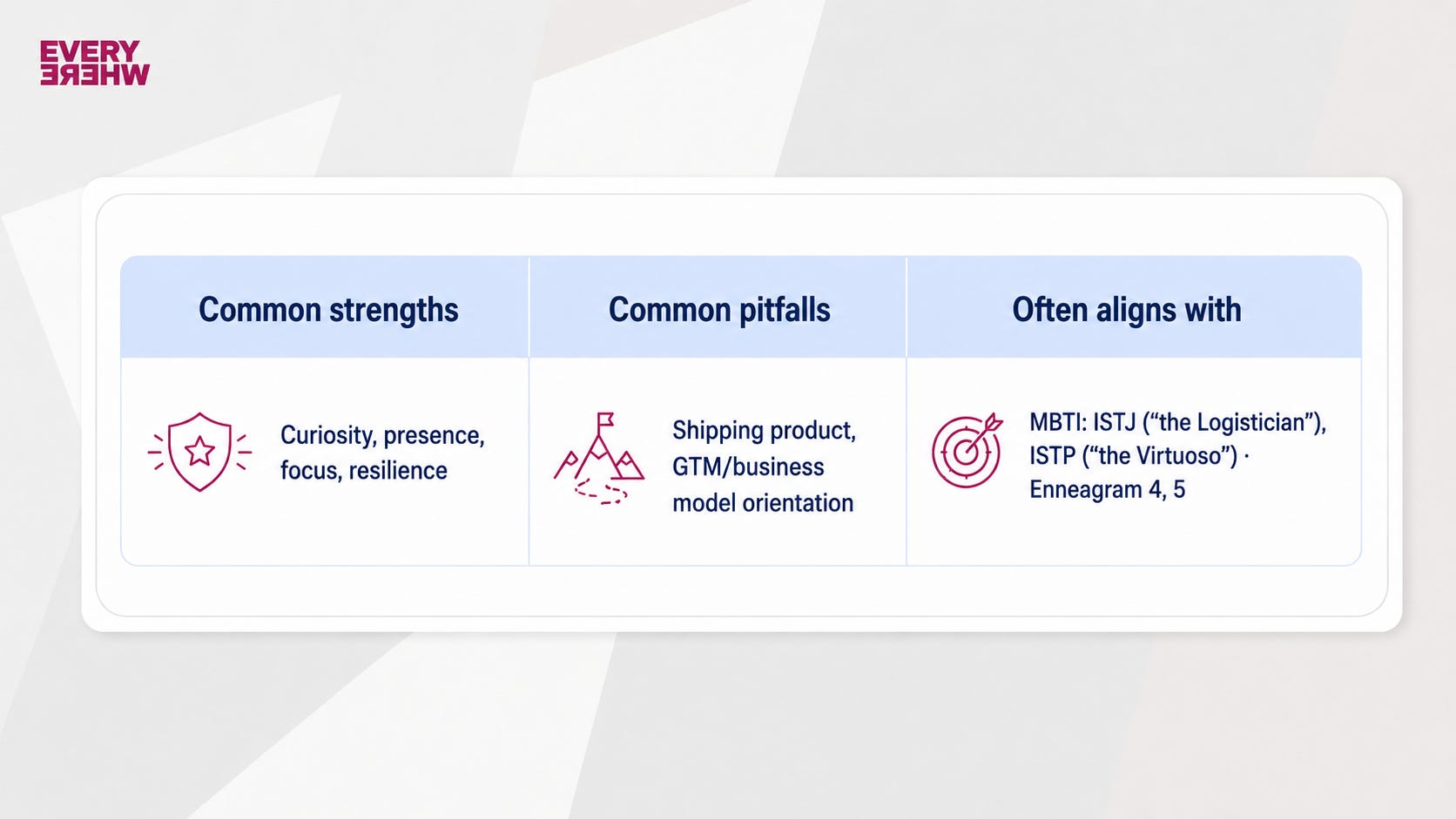
Curious, technical, discovery-obsessed. Scientists will go deep on one problem until they crack it, with a kind of endurance most people don’t have. Growing up as free thinkers makes them resilient to social pressure, too.
The flip side: They can be perfectionists and avoid shipping until the product reaches their bar. They may be blind to this tendency because they are so focused on the product and not the market.
The MBA
Methodical. Clinical. Spreadsheet-first. The MBA founder finds the white space, builds the playbook, and executes with precision. Planning, research, and a well-tended network are the strengths. What’s often missing is a personal “why.” MBA founders often have deep conviction about the opportunity, but not always deep passion for it.
MBAs are built for businesses that reward planning and execution over sudden insight. Competition doesn’t scare them, which makes MBAs excellent fast followers in a market someone else pioneered. Where they struggle is when the plan breaks down: without an emotional stake in the problem, it’s harder to push through the hard stretch.
Warby Parker’s four Wharton founders are the classic example. They looked at a consolidated industry with one giant (Luxottica) and saw an opening for a digital-first, DTC challenger. They approached the business like a class project, working with their own professors on pricing, mining every scrap of customer feedback for the next move. Data and market response drove the company forward, not gut instinct. Side note: In today’s market - there are a LOT of MBA founders chasing the AI gold rush. We think in this market these founders can build great cash flow businesses but the Scientists and Wallbreakers are probably more venture-backable.
From Anna: While most people love to critique MBA founders, they have some great strengths. They treat the business like a learning problem. They ask for advice, chase customer feedback, and follow the data even when it means killing an idea they loved. They can also build strong brands, because they’re wired for consistency and a clean, end-to-end customer experience.
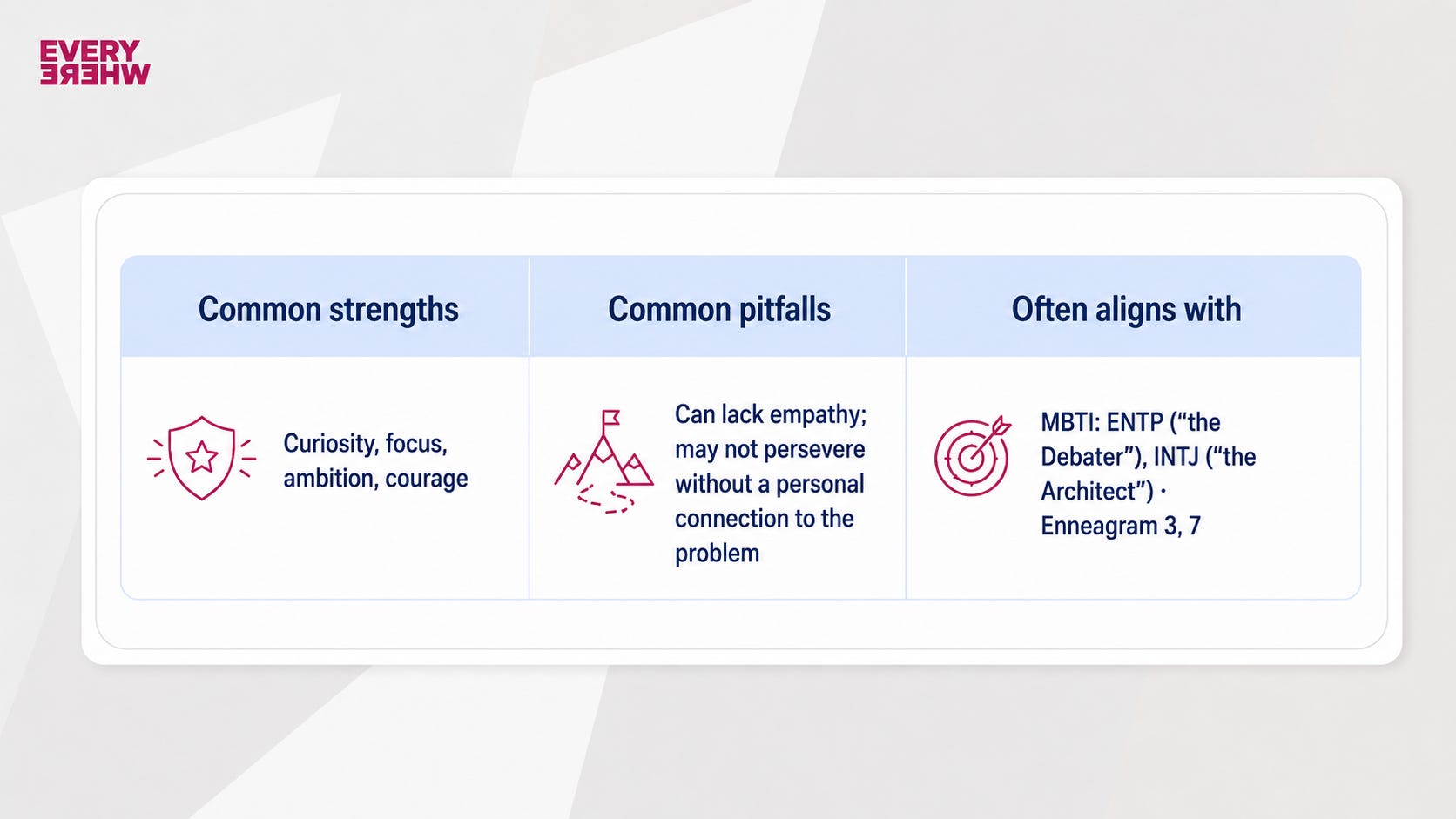
So, what’s your type?
If you’re a founder, you probably already know. If you don’t, ask your co-founders, your team, your family. (Side note: asking for feedback is itself a leadership strength.)
No framework this tidy captures everyone perfectly - most people are a dominant type with streaks of the others. Anna’s an Empath with a dose of MBA and a sprinkle of Scientist. Jenny’s a Scientist with a healthy dose of Wallbreaker and a touch of MBA. We both had to learn to shore up our tendencies and strengths with other skills.
Does this resonate? Jenny and Anna would love to hear your thoughts, and your type!