
Every day, marketplaces need to move money to thousands of people at once: hosts, creators, sellers, contractors, and distributed workers across different markets. The workflow sounds simple, but behind it is a complex web of banking integrations, compliance requirements, reconciliation, and local payment infrastructure.
Radar is focused on making that infrastructure work.
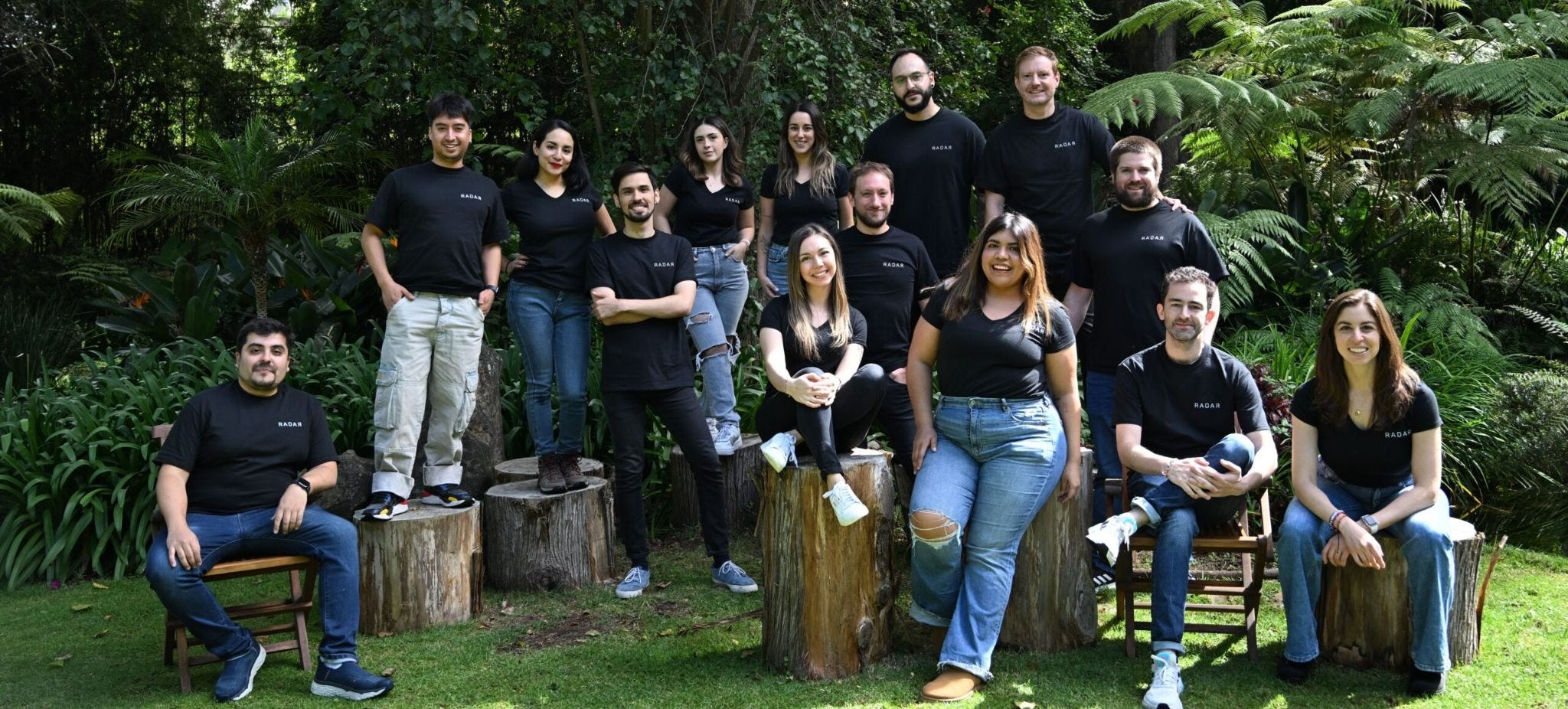
The company automates financial operations for platforms that need to pay large groups of people simultaneously. Its specialty is payment dispersion, helping companies like Airbnb, TikTok, and Booking move money across Latin America more efficiently and reliably.
In a region where many fintechs are competing for the largest markets, Radar has gone after countries that are often underserved by global payment infrastructure, including Ecuador, Bolivia, and Paraguay. These markets may be smaller individually, but together they represent a meaningful opportunity, especially for global platforms looking to operate across Latin America without rebuilding payment rails country by country.
That focus has shaped the company’s operating discipline as well. Founded in 2022, Radar has raised just $1.5 million, became profitable within three years, closed 2024 with $2.9 million in revenue, and is projecting $12 million by 2026.
Early on, when banks would not give Radar direct access to their systems, Herbert Schulz and the team built their own workaround using a physical bank token, a webcam, and AI to read authentication codes in real time. It was scrappy, imperfect, and exactly what the moment required.
Today, that shoebox is no longer needed. Radar now connects directly into banking systems and processes more than one million transfers per month.
From our lens, this is where durable infrastructure companies are often formed: in the messy operational gaps that incumbents are too slow to solve and larger players are too broad to localize.
As marketplaces, creator platforms, and cross-border commerce continue expanding across Latin America, payment infrastructure will need to become more embedded, more flexible, and more regional by design.
Radar is building in that direction, toward a world where global platforms can move money across overlooked markets with the same speed and reliability they expect in the largest ones.
Read the full article on Diario Sustentable