Welcome to Founders Everywhere, where we highlight the incredible people behind the companies we’ve backed at Everywhere Ventures, a global pre-seed fund supported by a community of 500 founders and operators.
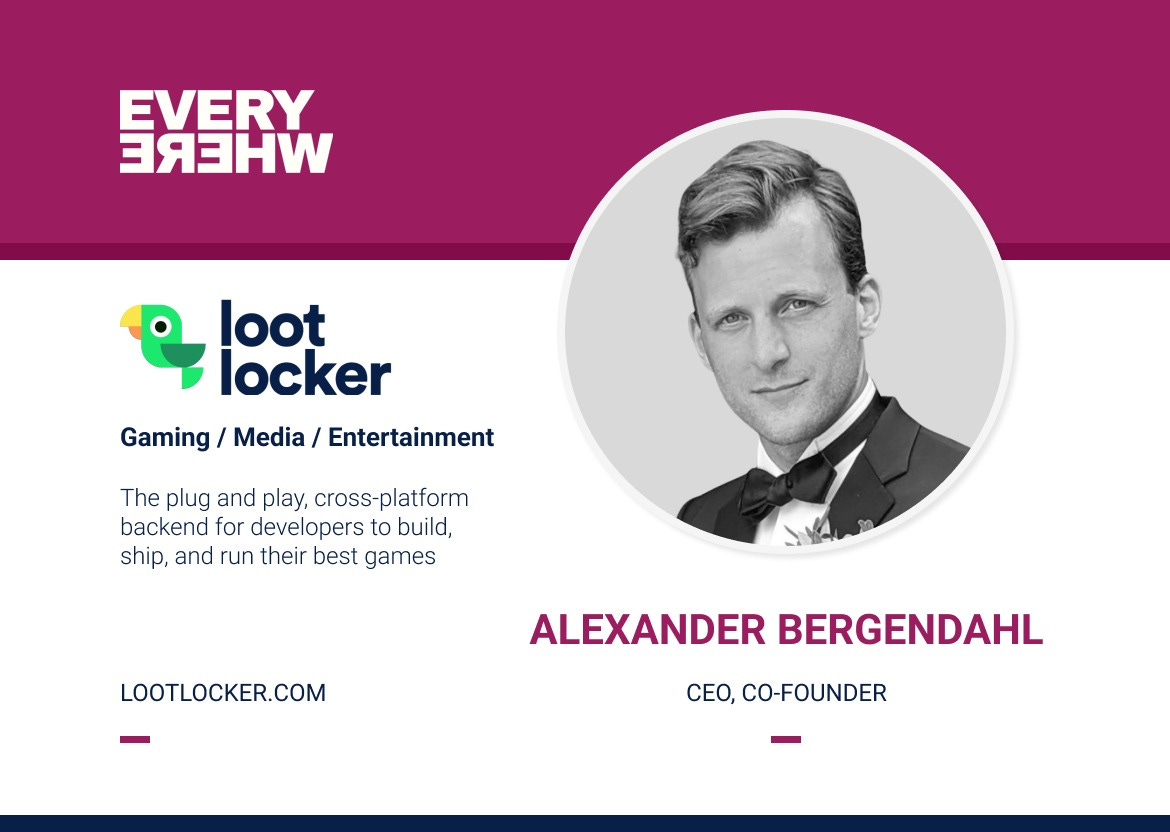
Game developers and publishers pour years into building worlds, characters, and experiences, only to lose direct access to their players the moment a game is published. Once a title launches on platforms like Steam, PlayStation, or the App Store, the player relationship is largely controlled by the platform rather than the developer. LootLocker is the game backend platform that gives developers and publishers the tools to own and grow their player relationships directly. LootLocker was built around the idea that, aside from the game itself, a developer’s most valuable asset is its customers. They’re locking up and protecting the developer’s most valuable “loot”: player relationships, identities, progression systems, and content that keep players engaged over time. By keeping those systems accessible and buildable, LootLocker helps developers maintain ownership of that relationship regardless of where a game is distributed.
Co-founder and CEO Alexander Bergendahl brings nearly 20 years of gaming industry experience to LootLocker, having seen the ecosystem from nearly every angle: building and running studios, working inside publishers, and launching startups of his own. After exiting a previous venture, he decided it was time for developers to own their player relationships the way other digital businesses own their customers. He partnered with Andreas Stokholm, CTO, a longtime collaborator and backend engineer, to build the infrastructure that gives game creators the tools to actually own and grow their player relationships, not just their content.
What’s LootLocker’s mission?
Our mission is to change who really owns the player relationship in games. I believe the most successful publishers of tomorrow will have direct lines to their players for communication, engagement, and commerce, instead of renting access from big platforms. As direct-to-consumer models gain traction (helped by things like Epic challenging Apple and Google, and the rise of third-party stores) we want LootLocker to be the infrastructure that lets game companies talk to, understand, and serve their communities wherever those players choose to play.
Tell us about some recent milestones that LootLocker crushed.
Earlier this year we passed 10,000 active games on the platform and we now power a game with well over a million players. We also signed our first publicly traded customer. For a relatively small startup, those are strong signals that both emerging teams and larger companies trust our technology. They also feel meaningful against the backdrop of the last few years, where the funding boom in games created a lot of new studios, many of whom were potential customers for us, and then a lot of that capital dried up, leading to shutdowns and layoffs across the industry.
How does LootLocker inspire “customer love”?
We work with everyone from first-time indie developers and hobby teams to established studios and publishers with multiple titles. Indies use LootLocker to go from zero to one without building a backend from scratch, while larger teams use us to connect their catalog, cross-promote between games, and re-engage players who might have churned. What people love is that we’re very responsive (both on support and in product development) and that you can do a lot without being a backend engineer. When a customer has an idea for a new way to engage players, we try to ship the underlying tools quickly so they can experiment and push their games, and our platform, in new directions.
How has your background influenced you as a founder?
Besides being in the gaming industry for over two decades, entrepreneurship has always been part of my life. All of my five siblings have started businesses of their own, both for-profit and nonprofit, so building things from scratch never felt unusual to me. That mindset gave me the confidence to take risks, learn from failures, and keep starting new ventures. We started the company in Sweden and later went through Techstars Philadelphia, which ultimately led us to become a U.S. company. That journey taught me how differently startups operate across markets and reinforced the importance of staying close to customers.
Any favorite podcasts?
For anyone in games, I highly recommend “GameCraft” by Mitch Lasky and Blake Robbins. It’s a very well-produced, deep dive into the business of games, with a lot of historical context and analysis of what’s happening now. Outside of games, my two favorites are “Strong Songs,” where a jazz musician breaks down well-known songs in incredible musical detail, and “Sticky Notes,” which does something similar for classical music. My wife is an orchestral musician, so those two shows get a lot of play in our household.
Fun fact:
I’ve been baking sourdough for about 10 years, long before it became a pandemic trend. It’s now a weekly ritual, and my kids get fresh bread every weekend. Their favorite is an olive and gruyère loaf.
Listen to Marty Ringlein with Jenny Fielding, on the Venture Everywhere podcast: Highlights, Hype, & Hot Takes on NY Tech. Now on Apple & Spotify. Check out all our past episodes here!