
Six-time author Sebastian Mallaby kicked off our AGM by diving straight into the origins of DeepMind and his decade-long relationship with founder Demis Hassibis. Many know Mallaby’s prior works, such as The Power Law, which is perhaps now the most comprehensive work on the history of venture capital. His newest book, The Infinity Machine, chronicles polymath founder Demis Hassabis and gives an overview of where AI has been, and perhaps where it is going.
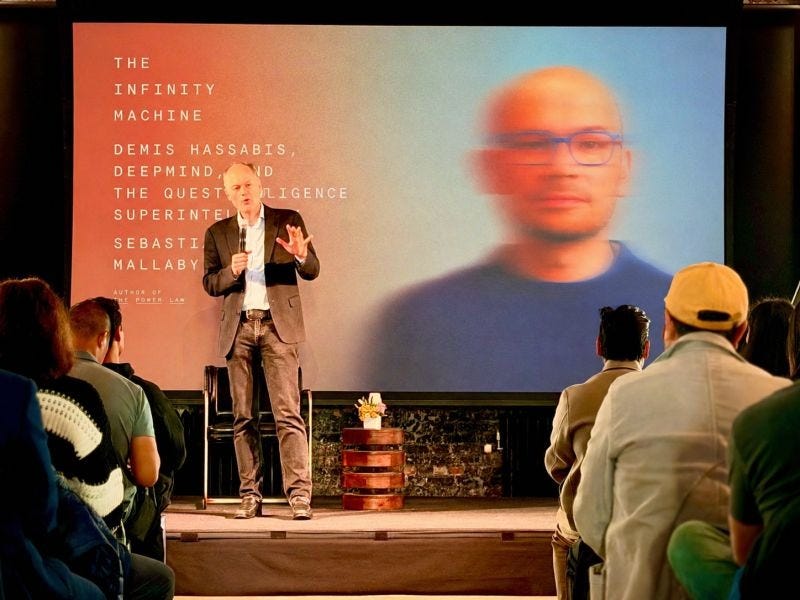
Mallaby opened with a question that’s been haunting the best minds in technology: what does it actually take to build something that changes everything? His book traces Demis Hassabis and DeepMind’s decades-long quest toward superintelligence. It’s a story about conviction held long before the world caught up and it felt like exactly the right place to start for the moment we’re all living through. Hassabis has famously said, “First you solve AI. Then you solve everything else.”
The story of DeepMind, and of AI, is the backdrop of today’s entrepreneurial world. At Everywhere Ventures we’re not focused on these obvious trends, but where the tailwinds are taking us. We’re looking at the second, and third-order effects, and where founders are expanding on this new premise. As such, it couldn’t have been more fitting to have Mallaby set the stage for our AGM.
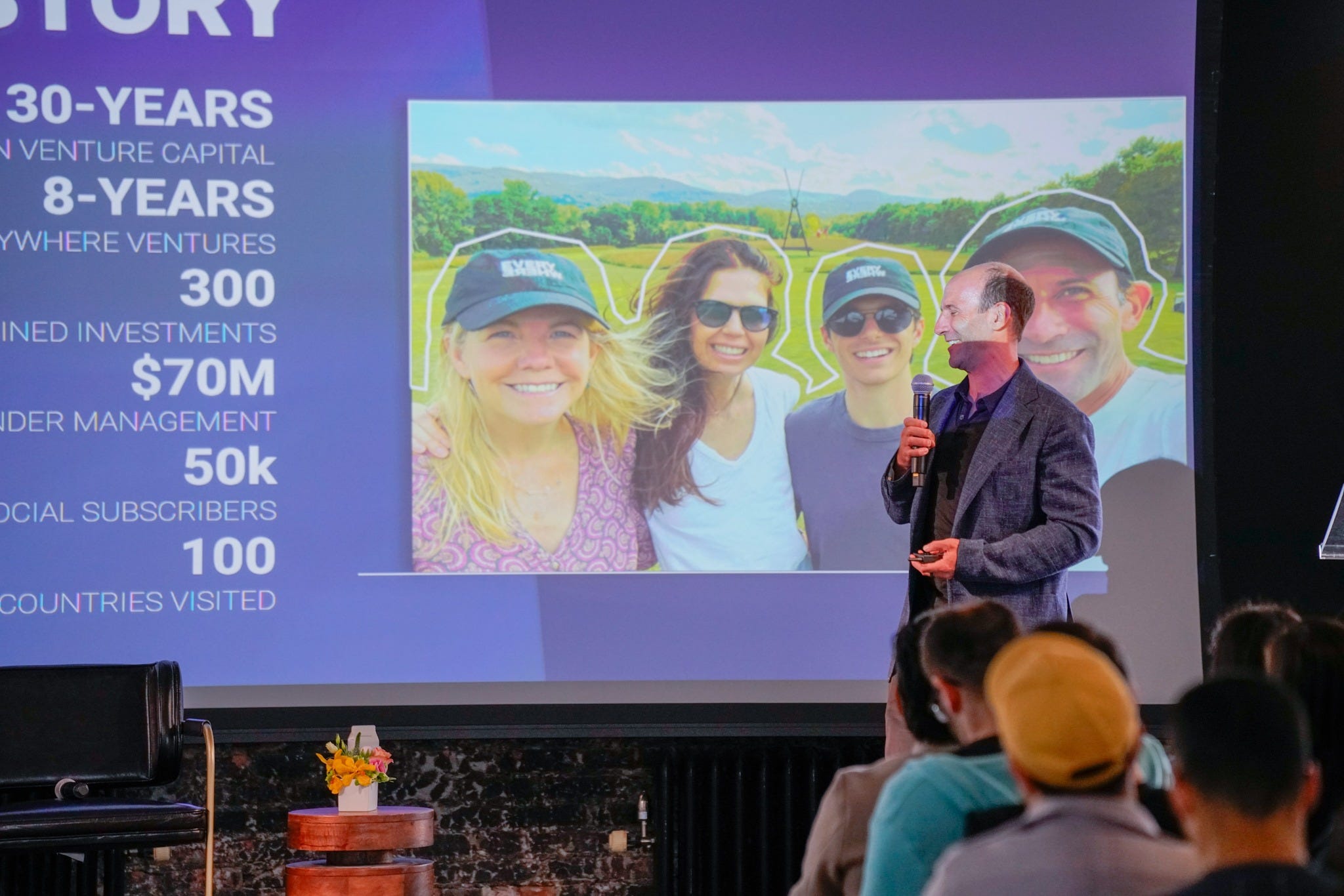
Our Story
Jenny and Scott founded Everywhere Ventures eight years ago with a simple belief: the best founders don’t always come from the places most funds are looking. Instead they’re everywhere, building in places that feel early, uncomfortable, and not yet obvious to everyone else. Today, we’ve invested into hundreds of companies and have built a thriving community of founders. Trends evolve, and tailwinds shift, but what remains the same are founders building at the edge, innovating and pushing us forward in new ways. The premise of Everywhere is that it’s our community that keeps us on this frontier, even as the tides shift, and the world changes. The best founders perennially move to the edge of the technology map, and we trust in their stewardship to lead us toward the non-consensus frontiers the world hasn’t fully adopted.
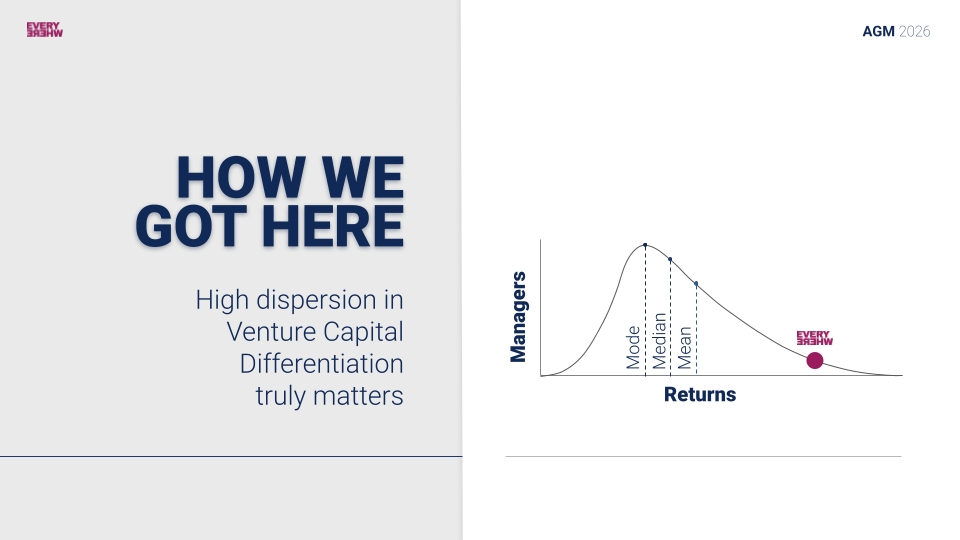
How We Got Here
Venture capital is a high-dispersion asset class. The difference between a top-quartile manager and a median one isn’t incremental, it’s enormous. This means differentiation isn’t a nice-to-have; it’s the whole game. Our job is to find non-consensus ideas where price still lags inherent value.
Today, we see three second-order effects creating mis-priced, non-consensus opportunities.
The first is fintech infrastructure. The fintech boom of the past decade created a wave of consumer-facing products, and underneath them, a tangle of legacy plumbing that was never built for what it’s being asked to do. The obvious bet is on the apps. Our bet is two layers down: KYC and identity management, fraud and risk tooling, data layers, stablecoin rails. That’s where the durable margin is, and that’s where we’ve backed Complyance, founded by Richa Kaul. Complyance automates regulatory compliance for financial institutions, replacing manual, error-prone processes with an AI-powered platform built for the pace of modern regulation. That’s the infrastructure financial institutions actually need for the world they’re operating in now.
The second is AI infrastructure. Everyone is betting on the large models. We’re betting on what the models can’t run without. Security, energy, orchestration, the unsexy, load-bearing infrastructure that makes AI deployable at scale. Operant.ai, founded by Vrajesh Bhavsar, Ashley Roof, and Priyanka Tembey, sits squarely in this thesis. Operant provides runtime security and observability for AI systems, giving enterprises the visibility and control they need to deploy AI safely in production. When enterprises ask how they actually run AI reliably at scale, Operant is part of the answer.
The third is AI-native companies, but not just any AI wrapper. The ones that win will do three things: generate net new data that didn’t exist before, take action rather than just surfacing insight, and amplify humans rather than replace them. Those companies become genuinely impossible to displace. Keebler Health, founded by Isaac Park and Andrew Stickney, is a company we believe fits that profile. Keebler Health uses AI to streamline the prior authorization process, cutting the administrative burden that slows down patient care and burns out clinical teams. That’s AI building in a space where it can meaningfully change outcomes, not just automate busywork.
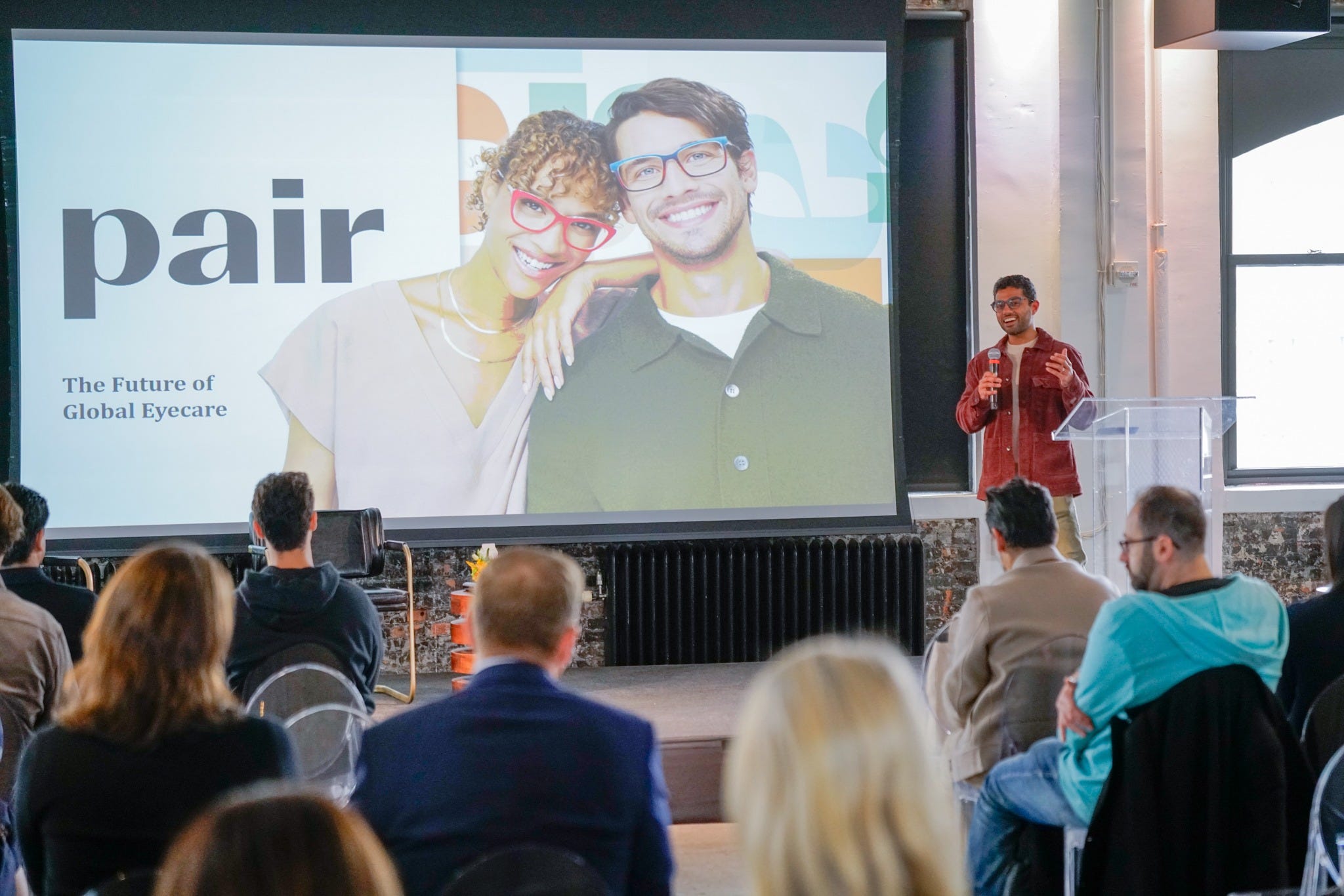
The One That Made Us Look Twice: Pair Eyewear
Speaking of non-consensus…we’re a fund focused primarily on b2b software opportunities, and yet we wrote a pre-seed check into a consumer eyewear company with co-ceos still in university. But when we met Nathan Kondamuri and Sophia Edelstein, we knew they were special, with a vision for launching an entirely new category of eyewear: weekly product drops, a subscription membership, on-demand manufacturing, and a lens lab with 90+ patents. They built an incredible brand with the average customer owning more than eight top frames. They’re now in more than 1200 retail stores and gaining strong traction. Sometimes the best bet is the one nobody expected you to make.
Hot takes, Macro trends
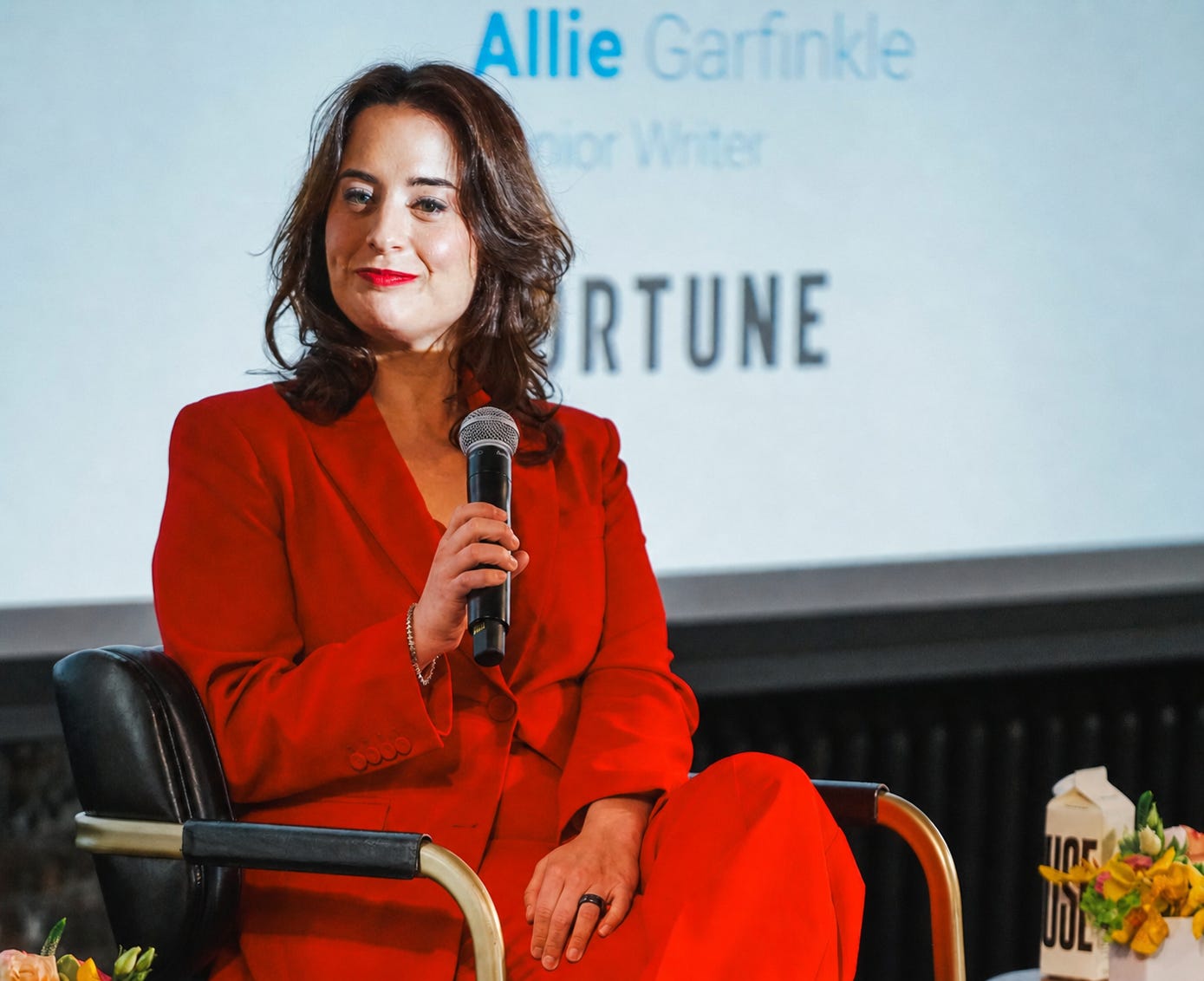
We closed the AGM with new General Partner Anna Barber and Fortune’s Allie Garfinkle in a wide-ranging conversation about the new world of venture. One that’s headed away from bloated firms, consensus trades, and old assumptions about how companies scale, and back toward something smaller and more human. Drawing on both venture history and today’s market, Allie argued that the firms built for true venture-scale returns will increasingly separate from the asset managers simply deploying ever-larger pools of capital. The middle is getting squeezed, high AI valuations are masking fragile companies, and secondaries may do more than the long-awaited IPO window to reshape liquidity. Her core point was that venture still matters because it remains one of the few financial structures designed to back ambitious people with unproven ideas. We agree. We think the future belongs to small, focused firms staying close to founders and true to the craft of early-stage investing.
Looking ahead
We left the AGM feeling what we always feel after spending time with this community: optimism and momentum. The future of venture capital belongs to firms that are genuinely differentiated: in their sourcing, their diligence, their networks, and their conviction. Not funds that follow the consensus, but firms that form their own view early and hold it. We’re glad you’re part of it.
Looking to explore more insights from our team? Dive into Jenny’s book, and follow Scott and Anna on Substack.