
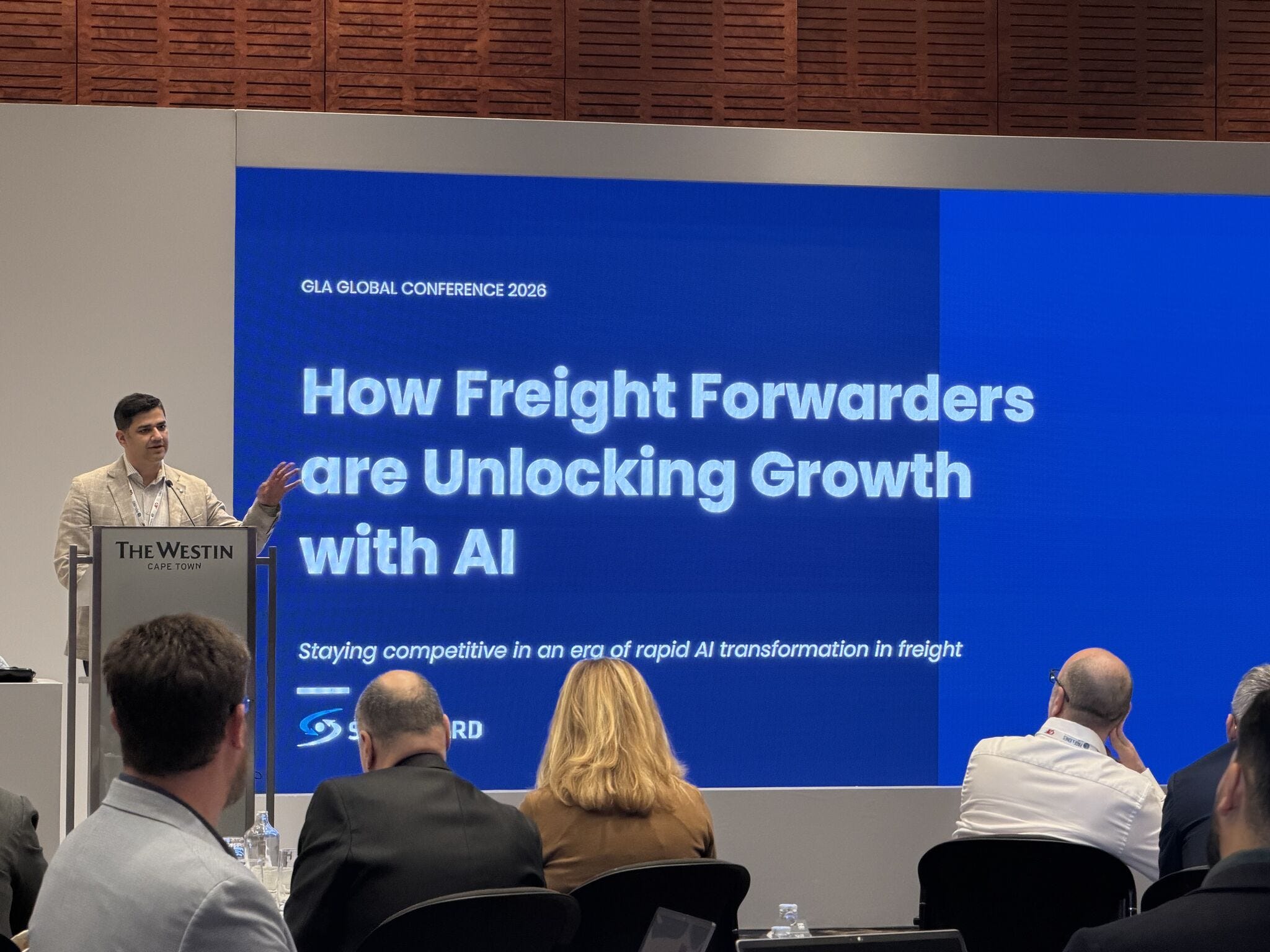
Freight forwarding remains one of the most relationship-driven parts of global trade. Local expertise, customer trust, and operational judgment still matter deeply. But smaller and mid-sized forwarders are increasingly under pressure from thin margins, manual workflows, and larger competitors with more advanced technology. Starboard is building for that gap.
In a recent feature in The Loadstar, Sumeet Trehan shared how the company is using AI to help smaller forwarders compete more effectively. Trehan’s perspective is shaped by his experience across Maersk, BCG, and Flexport, where he saw firsthand that digital freight was not always solving the right problem.
The issue is not that small forwarders lack expertise. In many cases, they are closer to their customers and better understand the operational nuances of each shipment. The challenge is that much of their day-to-day work is still buried in emails, PDFs, spreadsheets, carrier portals, agent replies, and constantly changing rates.
That friction is especially visible in the quoting process. A forwarder may receive dozens of quote requests a day, with each one requiring manual work across multiple systems and sources. When response times stretch from hours into days, business can be lost to whoever replies first.
Starboard’s approach is to bring AI into the quote desk. The platform connects to a forwarder’s inbox, reads incoming RFQs, extracts cargo and routing details, breaks shipments into legs, searches contract and spot rates, and helps gather missing information from agents or co-loaders.
The goal is not to replace the forwarder. It is to give them the kind of speed, structure, and procurement intelligence that larger players have historically been better positioned to access.
That distinction matters. Freight forwarding is still exception-heavy and local by nature. The person who knows which carrier office to call, which routing may fall apart, or which customer needs extra attention remains central to the process. Starboard is building around that reality rather than trying to erase it.
The company’s broader thesis is that AI can help turn messy, unstructured freight data into something usable without forcing forwarders to rip out their existing systems. For an industry that still runs on inconsistent documents, emails, and fragmented workflows, that is a meaningful unlock.
As AI becomes more embedded in logistics, the most valuable applications may not be the flashiest demos. They may be the tools that make core workflows faster, more accurate, and more profitable.
For smaller forwarders, Starboard is positioning AI not as a replacement for local operators, but as a way to help them respond faster, quote better, and protect the customer relationships that make them valuable in the first place.
Read the full article in The Loadstar.